


The savoury snacking category remains a dominant force for retailers in 2026. Data from late 2025 reveals that a staggering 99% of consumers enjoy savoury snacks, highlighting a massive opportunity for businesses to drive sales through optimised visibility and tailored ranges (Kantar).
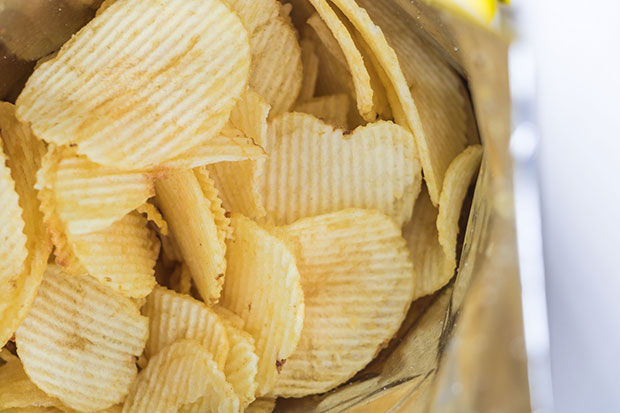
A significant portion of snacking is tied to social gatherings and relaxation, with 32% of snack sales occurring during the evening block between 5:00PM and 9:00PM (Kantar).
To capitalise on these high-margin Big Nights In, retailers are encouraged to prioritise sharing formats.
Ed Merrett, Wholesale Controller at PepsiCo emphasises the financial benefit of strategic shelf layout, stating: “Sharing formats should sit at the top of your main displays so they are right in the shopper’s eyeline.”
Merrett adds that this positioning “grabs attention and encourages trade-up to larger packs, which deliver higher value than singles.”
Brands like Doritos and the premium, non-HFSS Sensations Crisps range are essential for driving these higher basket spends. Furthermore, the relaunch of Cheetos Original Cheese in 125g sharing bags specifically targets Gen Z consumers looking for bold flavours during at-home get-togethers.
Flavour remains the primary driver for consumers, influencing choice on 50% of all snacking occasions (Kantar). Shoppers are increasingly seeking out intense profiles and what is known as “safe adventure.” To tap into this, major partnerships are leveraging global events; for instance, Walkers introduced limited-edition, globally-inspired flavours for the FIFA World Cup 2026™, alongside a permanent Mexican Beef Taco flavour for Doritos.
Spicy profiles are experiencing a major surge, especially among younger demographics (Worldpanel by Numerator). This appetite for heat is highly lucrative, as demonstrated by the Doritos Flamin’ Hot SKU, which generated over £20 million in sales between its 2024 launch and late 2025 (NielsenIQ). Innovation also extends into the nuts segment, with the expansion of the That’s Nuts range to include classic crisp flavours like Walkers Prawn Cocktail and Monster Munch Pickled Onion.
To unlock the category’s full potential, retailers should adopt four core merchandising tactics.
Mission-based blocking means grouping the main fixture by shopping occasion (e.g., social sharing vs. single lunchtime snacks).
Point of Sale materials should utilise clear promotional signage, which internal PepsiCo research shows can deliver a 12% sales uplift.
Secondary displays can include placing sharing packs next to cross-category items like beers, wines, and spirits to capture impulse buys.
Eyeline placement should follow Merrett’s merchandising advice: “As a general rule of thumb, the higher the value, the higher they should sit.”
By blending a trusted core range of best-sellers with exciting new product development, retailers can successfully boost repeat purchases and incremental sales throughout 2026.
The Crisps, Snacks, and Nuts (CSN) category has grown into a massive retail sector, currently valued at nearly £5.3 billion (Nielsen IQ). This dynamic category continues to outpace other impulse sectors, offering major opportunities for retailers who align their stock with changing consumer habits.
Stuart Graham, Head of Convenience and Impulse at KP Snacks, emphasises this momentum: “CSN is a dynamic, exciting and growing category, outpacing the growth of other impulse sectors. It represents a massive opportunity for retailers to grow sales and drive footfall by continuing to focus on key consumption and shopper trends.”
According to Graham, the ongoing expansion of the category is underpinned by specific consumer preferences regarding format, price, and taste: “The Crisps, Snacks & Nuts category is thriving, driven by key trends in convenience, bold flavours, and sharing occasions.”
Two distinct shopper missions are driving this growth: Food-to-Go and the Big Night In.
On-the-go lunch and snack missions now represent 16% of the top ten missions within the convenience channel (Lumina). Busy, budget-conscious consumers are heavily gravitating toward Price-Marked Packs (PMPs) because they offer a clear perception of value. KP Snacks has capitalised on this by expanding its PMP range, introducing options like McCoy’s Salted to target the top flavour segment in the market.
Conversely, when consumers stay home to socialise, they favour sharing formats. Sharing is currently the largest segment within CSN, valued at £2 billion (Nielsen IQ). Retailers can capture this audience by focusing on market leaders like KP Nuts (Nielsen IQ) and Butterkist, which commands a 30% market share in the popcorn segment (Nielsen IQ).
Taste remains the ultimate driver for category purchases. Spicy profiles have become particularly lucrative, accounting for over 10% of total category sales (Nielsen IQ), which prompted the launch of Nik Naks Xtra Hot ‘N’ Fiery in a £1.35 PMP format.
Simultaneously, there is a prominent appetite for “nostalgia” and classic profiles. This trend is supported by the return of Skips Salt & Vinegar and the revival of Discos Pickled Onion, a flavour brought back after being absent from store shelves since 2005. This strategic pairing of new product development (NPD) with familiar favourites satisfies the 63% of CSN shoppers who report that they enjoy trying new products (Lumina). To help stores navigate these trends, KP Snacks promotes its “25 to Thrive” initiative—an impartial framework identifying the top 25 must-stock SKUs. In real-world retail trials, stores implementing this core range achieved an average sales growth of 15.3%.
To further optimise sales, Graham outlines clear merchandising principles: “Because 56% of crisps and snacks are selected from secondary locations rather than the main aisle (Lumina), retailers should utilise impactful branded point-of-sale (POS) displays.
“Position these secondary snack displays near complementary items, such as cross-merchandising sharing bags next to soft drinks or beers, wines, and spirits.
“Simplify the shopping experience by blocking similar products together, prioritising high-velocity best-sellers, and maintaining a robust selection of PMPs to instantly signal value.”
Andy Brown, Director at Envis Snacks, comments: “The tried and trusted main flavours will always be important, but we see that there is real hunger in consumers for things that are firstly, a little different, and secondly that have unique or hot flavours. We are delighted that we can offer options for both with our Lorenz Pomsticks and Curlys hitting the mark for differentiated snacking and WOW Jalapeno and X-cut Chilli & Lime dishing up some great tangy flavours. By offering differentiated products and unique flavours we feel we offer great incremental sales opportunities for convenience retailers and that, coupled with our market leading shelf life, to avoid stock loss risks, and a range of bag size options (from 75 and 130g sharing bags) allowing the right value proposition and margins by store type / location.”
Envis Snacks has launched X-cut Hot & Spicy 75g and Tex Mex Curlys to complement its existing ranges of crisps and snacks. It has also introduced oven-baked, bite-sized snacks ‘Lorenz Mini Crackers’ to help revitalise the oven baked segment as they are perfect for outdoor meals and social gatherings, of which there should be a few with all the events on this summer, and are available in Salted, Cheese & Onion, and Bacon Style.
In terms of adding real value for consumers Envis Snacks has also reduced the PMP of the ever-popular Wanted Tortilla Chips to £1 which is exceptional value for consumers with a 100g fill.
The UK crisps and savoury snacks market represents a substantial portion of the food and drink manufacturing industry. Despite ongoing cost-of-living pressures, consumer demand remains highly resilient. The broader UK savoury snacks market is projected to expand at a Compound Annual Growth Rate (CAGR) of 5.3% over the next decade, driven by shifting lifestyle habits and a consistent desire for accessible indulgences (Orion).
An increasingly prominent trend in convenience retail is the consumer appetite for premium “treat” elements that elevate everyday snacking. Hand-cooked crisps have captured a large portion of the market, with household penetration rising by 3.4 percentage points year on year to 58.5% (Kantar).
When choosing their snacks, 59% of consumers report that balancing a familiar taste with flavour innovation is a crucial purchasing factor (Mintel). This makes snacking a low-risk category for flavour experimentation. In fact, an overwhelming 96% of operators who introduced new snack products noted that they met or exceeded initial sales projections (Datassential).
Shoppers are also increasingly looking at the structural format of their snacks, trending heavily toward thicker-cut, textured varieties that carry bolder flavours. This shift is highly evident in the hand-cooked crinkle segment, which is currently worth £37 million and expanding at a value growth rate of 16.6% year on year—significantly outstripping the larger £275.2 million flat segment’s 5.3% growth (Circana). Burts Snacks has heavily capitalised on this behaviour, successfully launching premium items like its Herb Roasted Chicken and Mature Cheddar & Caramelised Onion Chutney Ridges, which generated approximately £500,000 in 2025 sales alone (Burts Sales Data).
Beyond changing taste preferences, strict high fat, sugar, and salt (HFSS) regulations are actively reshaping UK supermarket shelves and restricting certain promotional strategies. To help retail partners navigate these promotional display rules without sacrificing premium options, Burts restructured its core line-up to deliver compliant alternatives.
Highlighting this strategic transition, Sas Horscroft, Head of Marketing at Burts Snacks Ltd, states: “HFSS legislation is changing the landscape for snacks in-store, and our goal is to make the transition seamless for our retail partners.”
By reformulating flagship options—such as Lightly Sea Salted, Devon Roast Beef, Mature Cheddar & Onion, and Sea Salt & Malt Vinegar—Burts ensures that premium items can still occupy high-visibility promotional fixtures.
Horscroft notes: “By reformulating our hand-cooked range, we’re giving shoppers products they trust, while helping retailers stay compliant on shelf.”
Changing eating habits are also influencing store layouts, as consumers routinely substitute traditional sit-down meals with simpler, economical “pick me up” options where snacking becomes part of a main meal (Circana). To capture these on-the-go single-serve missions alongside evening social gatherings, retailers should offer a strong mix of both 40g and 150g formats. Grouping products cleanly by format or occasion, planning cross-merchandising displays with complementary items like drinks, and leaning into loyalty or meal-deal promotions will ultimately reduce shelf-side friction and maximise overall basket spend throughout 2026.
Crisps and snacks retailers are leaning heavily on brand power and disruptive innovation. Pringles remains a cornerstone of the segment, tracking as the number one large sharing branded crisp brand with a value of £45.1 million (Circana) and securing modest growth of +0.3% year-on-year (Circana).
Simultaneously, the introduction of Cheez-It Snap’d has injected new energy into retail aisles. Following its launch in late 2024, Cheez-It became the UK’s biggest new brand launch of that year (Kantar). It has since achieved a massive £33 million in value sales (NIQ). The expansion is driven by a precise format strategy across six tailored pack sizes. The hero “Double Cheese” variant alone generated over £17.5 million in total sales (NIQ), while the “Cheese & Chilli” SKU hit £8.6 million (NIQ), satisfying a growing national preference for spicy profiles.
Reflecting on this monumental reception and the brand’s recent “Product of the Year 2026” accolade, Rebecca Worthington – Salty Snacks Marketing Lead at Mars Snacking states: “Taking home gold in the Cheesy Crisps & Snacks category, the quartet comprising of Double Cheese, Cheese and Chilli, Cheese, Sour Cream and Onion, and most recently, Cheese and Smokey Bacon has clearly struck a chord with British snackers.”
Layout optimisation is critical. Rather than confusing consumers with an endless wall of secondary brands, Worthington suggests doubling or triple-facing core SKUs of foundational brands like Pringles.
Beyond the core aisle, secondary positioning acts as an excellent mechanism for boosting incremental revenue. Worthington describes how retailers should conceptually reframe the product line: “Retailers should think of crisps & snacks as a reliable basket builder all across the store, rather than from just one location.”
To maximise these cross-merchandising opportunities, store owners should place single-serve options adjacent to lunch meal deals, position multipacks near home cupboard essentials, and leverage experiential “store theatre” for seasonal launches.
Temporary campaigns and limited-edition runs are highly effective at capturing spontaneous, impulse-driven purchases. In 2025, the “Mystery Flavour Mario” gamification campaign achieved £2.3 million in value sales (Circana), while festive variations like the Christmas Mystery Flavour and Pigs in Blankets/Roast Turkey options pulled in £2 million and £1.8 million respectively (Circana). To capitalise on the peak summer 2026 season, the brand is deploying a major non-HFSS collaboration with Burger King, introducing Chicken Royale and Bacon Double Cheese XL flavours in a £2 PMP format.
For sustainable growth throughout 2026, Worthington outlines a three-pronged action plan.
Focus inventory tightly on large sharing lines and single packs to address both budget-conscious buyers and commuters.
Utilise clear point-of-sale signposts to break visual monotony. As Worthington emphasises: “The right signage acts as a vital ‘speed bump’, disrupting their subconscious journey and encouraging them to trial something new.”
Utilise designated digital hubs like stockitcheezit.com and Kellogg’s Vantage to access layout insights and trend parameters, fully maximising a brand that has brought £3.2 million in value sales to the convenience sector (Circana).
The premium handcooked crisp category continues to experience steady momentum as we move through 2026. Evolving eating habits, an appetite for texture innovation, and an explicit consumer focus on strict ingredient provenance are reshaping how shoppers select their snacks.
Despite a shifting economic climate, consumers are routinely turning to premium snacks as an accessible luxury to elevate social settings or quiet evenings at home. Rather than spending heavily on dining out, buyers look for ways to make at-home activities like family film nights, barbecues, or weekend gatherings feel distinctly special.
Tash Jones, Commercial Director at Fairfields Farm Crisps, highlights how the premium tier fulfils this consumer need: “Premium crisps continue to play an important role in these occasions offering an easy way to elevate everyday moments. Consumers are willing to trade up for products that provide great flavour, quality ingredients and an authentic brand story.”
To capture this budget-conscious but quality-driven shopper mission, retailers should prioritise 150g sharing packs. These larger sharing formats provide an affordable sense of indulgence and excellent value for household social moments.
While classic profiles like Lightly Sea Salted and Cheese & Onion remain baseline best-sellers, there is a pronounced demand for richer, more robust snacking experiences. Consumers are actively seeking “safe adventure”—bold, complex taste profiles like globally inspired seasonings and “swicy” (sweet and spicy) combinations that are anchored in comforting, recognisable foundations. For example, rich profiles like Roast Rib of Beef are seeing significant category growth.
Crucially, this demand for flavour intensity is closely linked to texture innovation. Modern snackers evaluate depth of crunch just as much as taste, driving a visible trend toward thicker-cut and ridged formats. To tap into this movement, Fairfields Farm introduced its first-ever ridge-cut crisp this summer with its limited-edition Cajun Barbecue flavour. Regarding this structural innovation, Jones explains: “The ridge cut format enhances the eating experience by delivering a bigger crunch and helping the seasoning cling to every crisp for maximum flavour.”
Developed in tandem with the brand’s “Secret Crisp Committee”—a consumer panel utilised to shape their pipeline—the vegan and gluten-free 150g format directly satisfies the demand for tactile, hard-hitting summer snacks.
Beyond flavour and crunch, modern consumers increasingly demand transparency and traceability from the brands they support. Shoppers are highly receptive to authentic “farm-to-bag” stories where cultivation and production are handled entirely on-site. This comprehensive operational oversight guarantees the quality, sustainability, and absolute consistency that contemporary snackers expect.
Simultaneously, traditional meal patterns are fracturing. Consumers are frequently replacing structured set meals with simpler, economical “pick me up” snack alternatives for lunches or on-the-go routines. To successfully maximise cross-channel revenue amid these shifting dynamics, Jones offers a clear blueprint for independent store owners: “To maximise sales, retailers should focus on offering a well-balanced snacking range that combines trusted favourites with premium and innovative options.”
By ensuring high shelf visibility through meticulous merchandising, deploying secondary sitings to trigger impulse buys, and maintaining an agile inventory that embraces modern texture and flavour trends, retailers can consistently drive category growth and bolster repeat basket spend.
Savoury snacking has evolved from basic indulgence toward a dual demand for enjoyment and functional health. Modern consumers are looking for options that keep them fuller for longer, sparking strong momentum for ambient, protein-rich choices like beef jerky.
Meat snacks have officially transitioned from niche sports nutrition into mainstream convenience. Because shoppers are increasingly scrutinising ingredient lists and processing, naturally complete real meat protein sources that are high in protein and low in sugar are gaining traction.
This trend directly aligns with changing daily routines. As flexible working, commuting, and active lifestyles disrupt traditional meal patterns, consumers frequently substitute set meals with portable, resealable “pick me up” options.
Shaun Whelan, Head of Convenience at Jack Link’s, outlines how to translate this shifting behaviour into retail success: “Retailers should think of meat snacks as a credible alternative within the wider savoury snacks fixture, not as a niche add-on. The key is to make the category easy to find, easy to understand and easy to buy.”
While classic variants like Jack Link’s Beef Jerky Original 25g maintain the highest unit rate of sale in the category, flavour remains a crucial choice driver. Younger shoppers, in particular, are looking for “safe adventure”—bold flavour variations like Sweet & Hot and Teriyaki that offer excitement within a trusted, recognisable format.
To recruit next-generation shoppers, Jack Link’s launched a high-profile, co-branded partnership with global creator MrBeast for 2026, featuring striking packaging and a 360° omnichannel campaign. However, despite the massive cultural relevance of such launches, UK jerky and biltong household penetration sits below 7%, leaving immense headroom for commercial growth.
To bridge this gap and maximise store revenue, Whelan stresses that product placement is everything: “Visibility is critical. The unseen is unsold. Meat snacks should be merchandised within the main savoury snacks fixture to reinforce their role as a credible alternative to crisps and nuts.”
Retailers can further boost basket spend by utilising clip strips, brand-blocking core best-sellers, and introducing meat snacks into food-to-go meal deals alongside energy and sports drinks.
The meat snacking sector in the UK is experiencing a significant transformation, moving beyond its traditional demographic limits. Leading this change is Fridge Raiders, the UK’s top chicken snack brand (Kantar). Valued at over £131 million, the Pilgrim’s Europe-produced label is comfortably outpacing its competition, generating a 6% volume growth compared to a modest 2% across the wider sector (Circana).
To capitalise on this momentum, the brand is rolling out two new product lines strategically positioned to recruit new demographics. This portfolio expansion follows a highly successful year where Fridge Raiders brought more than 730,000 new shoppers into its consumer base. Chris Doe, UK Marketing & Innovation Director at Pilgrim’s Europe, underscores the long-term intent behind this dual innovation: “This isn’t simply about adding products, it’s about strategically growing the category by removing barriers and recruiting new consumers. We’ve identified specific opportunities to bring new shoppers into meat snacking, and we’re backing that with genuine commitment.”
The brand’s expansion introduces unique platforms that resolve distinct consumer barriers.
To dismantle processed perceptions and attract health-conscious shoppers who typically avoid meat snacks, Fridge Raiders is expanding its Grills range with Chicken Skewers in Chinese BBQ and Satay flavours. Simultaneously, the brand is targeting Gen Z and Millennial audiences (aged 25 to 44) through its first brand partnership. Teaming up with Frank’s RedHot—the UK’s premier hot sauce brand—Fridge Raiders is launching a fiery variant of its core Chicken Bites to capture the fast-growing “hot chicken” craze.
Explaining this targeted approach, Doe notes: “Our Chicken Skewers address health-conscious consumers who don’t consider meat snacking, while Frank’s RedHot taps into the massive hot chicken trend with a collaboration that brings genuine flavour excitement.”
To maximise category expansion, the brand launches coincide with its most critical marketing initiative to date: the “Chicken for the Road?” masterbrand campaign. Developed alongside creative agency JOINT, the TV-led push aims to capitalise on Fridge Raiders’ existing 85% brand awareness while using light-hearted, tongue-in-cheek humour to build deeper emotional ties with consumers.
The campaign recorded the strongest pre-testing results in the brand’s history, signalling massive shelf-side disruption potential. For Pilgrim’s Europe, this extensive media rollout represents an active duty to lead the marketplace.
Doe outlines this philosophy: “The pre-testing results are the strongest we’ve ever seen, and the investment behind it demonstrates our commitment to building the category, not just our brand. When you’re at this scale and delivering this level of growth, you have a responsibility to lead. That’s exactly what we’re doing.”
By tightly synchronising targeted, trend-led product innovation with substantial, high-impact brand investments, Pilgrim’s Europe is systematically rewriting the rules of meat snacking to unlock new, incremental avenues of profit for modern convenience retailers.
The UK crisps, snacks, and nuts sector is expanding as consumers shift from rigid meal times toward flexible at-home and hybrid-working snacking occasions. Crucially, major brands continue to dominate this fast-moving category, driving 67% of total sales (Mondelez).
Susan Nash, Trade Communications Manager at Mondelez International, highlights how retailers can capitalise on these shifting shopping patterns: “For retailers, this means there is a clear opportunity to offer a balanced range that delivers against different missions.”
To capture these distinct missions, retailers must maintain a varied inventory focused on two prominent pillars.
Driven by an increased demand for convenient lunchbox and on-the-go items, healthier biscuit options like belVita and Cadbury Brunch are expanding. Brand-led innovation remains critical, supported by recent survey data showing that 72% of stores believe NPD drives incremental sales, while 68.6% note it boosts overall sales when paired with a core range (Mondelez). To meet this demand, belVita launched its non-HFSS Honey and Chocolate Chip Minis, while Cadbury Brunch introduced a 10-bar value pack for its Chunky Choc Chip, the top healthier biscuit SKU (Nielsen).
Representing 16% of all biscuit sales, savoury options offer immense flexibility. Ritz holds the position as the category’s top branded cracker (Nielsen), functioning as an essential fixture anchor for daily consumption or secondary cross-merchandising displays during peak hosting seasons.
Looking forward, the snacking segment is poised to solidify its role as an affordable household luxury.
Nash maps out the primary areas of focus for the industry: “Growth will be driven by meeting distinct need states across take home, on the go, sharing, lunchbox and seasonal occasions, while continuing to offer trusted brands, value-led formats and flavour-led innovation.”
Better For You snack bars have firmly transitioned into the retail mainstream, capturing a +12.1% increase in value sales (NIQ). Modern consumer demand has evolved beyond niche sports nutrition toward functional, everyday products.
This is reflected in the fact that Functional Health Bars are now the fastest-growing part of healthier snacking, up +24.3% compared to Sports Nutrition at just +5.5% (NIQ). This momentum spans both on-the-go single bars and take-home multipacks, which grew by +8.2% and +2.5% respectively (NIQ).
Alice Boardman, Marketing Manager at Natural Balance Foods, highlights the strategic drivers behind this shift: “What’s driving growth is no longer niche or sports-led products, but everyday protein bars that feel accessible, enjoyable and relevant to real-life routines.”
The TREK brand has heavily capitalised on this behaviour, growing +27.6% to reach a total value of £44.4 million (NIQ). Its core Protein Flapjacks act as the brand’s engine, accounting for 76% of sales at nearly £35 million (NIQ). While TREK multipacks are worth £28 million in grocery (NIQ), its single formats achieved a +52% surge within convenience channels (NIQ).
High-profile innovation has also accelerated penetration; for instance, the TREK Biscoff® Protein Flapjack became the top grocery cereal bar NPD, generating £3.7 million in grocery multiples (NIQ).
Concurrently, rising scepticism surrounding ultra-processed foods has propelled the n?kd. brand to a value of £40.8 million (NIQ). Its specialised n?kd. Protein sub-brand has reached £9.6 million (NIQ), while the n?kd. Fruit & Fibre range grew +40% to hit £2 million (NIQ). Looking ahead, Boardman emphasises that simplicity and transparency will continue to define the market: “Shoppers don’t want extremes – they want products that feel natural, satisfying and easy to understand.”
The sweet biscuit market is undergoing a notable shift as at-home socialising expands and traditional three-meal routines give way to flexible eating habits. Snacking has moved beyond simple convenience, transforming into a distinct moment for personal indulgence or sharing. Data shows that 76% of sweet biscuits are consumed within the home [Attest].
To capitalise on this consumer behaviour, brands must lean on familiarity and quality. Biscoff has solidified its presence in the UK, penetrating over 7.4 million households (Nielsen CPS).
Joanna Agnew, Marketing Director at Biscoff UK, emphasises that establishing a distinctive presence is a powerful commercial lever: “The prominence of Biscoff and the community around the brand, encourages customers to share Biscoff inspired products with their fellow Biscoff lovers, helping bakeries increase visibility and sales.”
Modern shoppers are increasingly willing to pay a premium for high-quality, reputable brand names that ensure a satisfying flavour experience. Products such as Biscoff Sandwich Biscuits—available in vanilla, chocolate, or Biscoff cream—address this demand for permissible luxury. Concurrently, portable options like the twin-wrapped 16x2pk Snackpack and the pre-portioned Biscoff & Go line cater effectively to on-the-go routines and precise portion management.
Because consumers frequently make rapid buying decisions at the fixture, visibility directly dictates performance. Agnew advises retailers to position highly recognisable product lines strategically to maximise margin potential: “The prominence of familiar brands in this category can be attributed to the growing priority of high quality products and when customers see their favourite brand on shelf, they know they are purchasing a snack that they will enjoy.”
To fully capture spontaneous basket spend, retailers should consistently place these staple sweet treats in highly visible, eye-level layouts near key impulse zones, such as main entrances and checkout till points.
The better-for-you snacking category is undergoing a marked shift as consumers prioritise holistic wellbeing. Rather than abandoning treats during times of widespread economic pressure, shoppers are choosing them with clearer intentionality. A prominent example is the mainstream demand for dietary fibre, driven by gut health awareness, alongside emerging interest in nutrient-dense snacks suitable for individuals using GLP-1 medications.
Caroline Mitchell, Kallø Brand Controller at Ecotone UK, addresses this changing landscape: “The concept of ‘permissible snacking’ continues to gain traction too. Consumers increasingly seek snacks they can feel good about eating regularly – products made with recognisable, natural ingredients, shorter ingredient lists and a clear nutritional purpose.”
To address these evolving requirements, Kallø has successfully leveraged its natural, wholefood credentials. The brand maintains a dominant position as the number one name in the jumbo rice cakes sector, which has grown to a valuation of £32.4 million. Backed by an intentional category strategy, Kallø has expanded its total distribution network by 4.4% and driven an impressive 12.9% surge in retail sales value (Circana).
A central factor behind this expansion is the ongoing performance of Kallø Veggie Cakes, which are successfully attracting younger shoppers to the fixture. While the core Beetroot flavour represents 60% of total Veggie Cakes sales, newer profiles like Sweet Chilli and Salt & Vinegar are securing independent momentum. Retailers can maximise these opportunities by noting that consumers routinely utilise these savoury options as a versatile base for customisable toppings.
Mitchell highlights the commercial possibilities this creates for store owners: “For brands and retailers alike, the opportunity lies in delivering snacks that combine enjoyment with everyday wellbeing – helping consumers make positive choices without sacrificing taste or convenience.”
The foodservice and retail snacking sectors are experiencing a clear surge in demand for internationally inspired taste profiles and “safe adventure”—where consumers seek bold, exotic variations within familiar, comforting formats. In response, RM Curtis has developed its Curious By Nature nut mix line, offering four distinct, intense combinations including Hoisin Spice, Hot Honey & Lime, Salted Maple, and Espresso Nutini.
Caroline Buggisch, Product Marketing Manager at RM Curtis, discusses the structural trend shaping the category: “Flavour trends impact all areas of the foodservice industry, with the crisps, nuts, and snacks category being no exception. In particular, internationally inspired tastes remain extremely popular and show no signs of slowing, evolving into sub-trends like fusion flavours.”
Beyond initial flavour excitement, long-term commercial success relies heavily on consumer retention and structural consistency across the fixture.
To create regular purchase habits, Buggisch suggests that independent retailers build a highly cohesive layout to anchor consumer trust: “Creating repeatability and scalability is important for building customers’ loyalty and return visits. This can be achieved by creating a strong brand identity throughout.”
To execute this, RM Curtis provides its Snacking Essentials ecosystem, which coordinates uniform packaging graphics across classic snack lines, larger family sharing bags, and small “shot” style packs.
For maximum category growth, store owners are encouraged to deploy a phased merchandising strategy. Outlets can capture immediate sales by prioritising highly accessible, proven staples like Whole Cashews or Milk Chocolate Raisins. Once baseline brand familiarity is established at the shelf edge, operators can systematically expand their ranges to incorporate more premium, margin-rich niche alternatives—such as Yoghurt Banana Chips and advanced Fruit, Nut & Seed formulations—to maximise overall impulse basket spend.
Comments are closed.