


- 3,840 farms now in Tilda®’s Basmati sustainability rice-growing programme, delivering significant reductions in water use and greenhouse gas (GHG) emissions across the supply network
- New scientific focus on further cutting emissions of the potent GHG nitrous oxide that arises from the use of fertilisers
- Continued advances across manufacturing, packaging and communities reinforce ambition to be one of the world’s most trusted and responsible rice producers
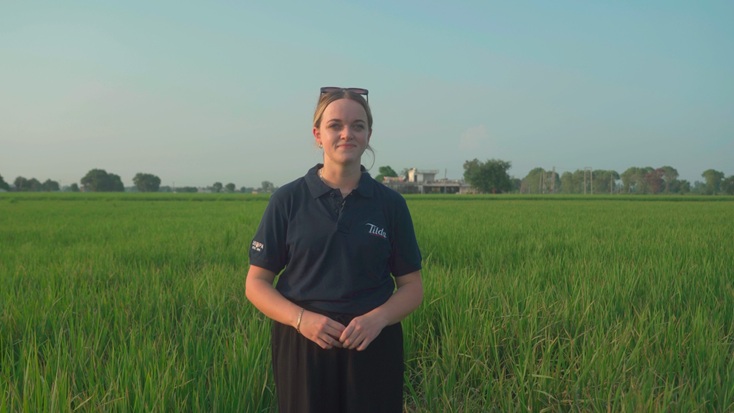 Tilda® today announces the publication of its 2025 Impact Report, marking a defining year in its ambition to become “one of the most trusted and responsible rice producers in the world”.
Building on the strong foundations laid in its 2023–2024 report, the UK’s best-selling rice brand has significantly expanded its responsible basmati farming programme in northern India, to further reduce use of irrigation water and resources that cause GHG emissions, as well as continuing to provide participating farmers with higher incomes from lower costs of production and enhanced crop yields.
Now the company is turning its attention to one of the most complex challenges in global agriculture: reducing nitrous oxide emissions linked to fertiliser use in rice growing.
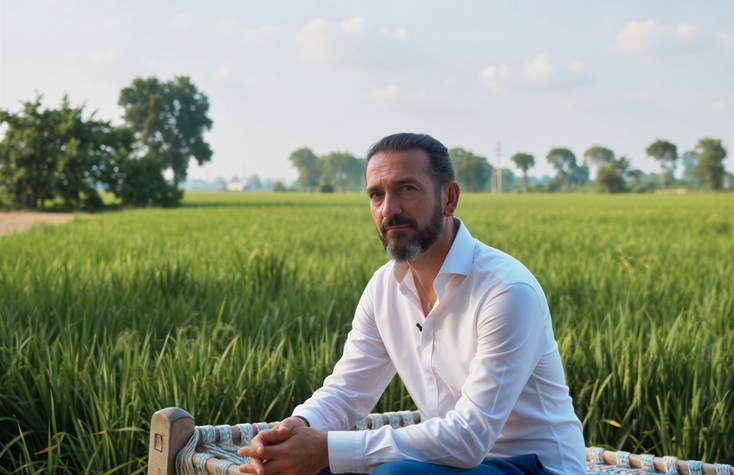 “At a time when global food systems are under pressure from climate change, water scarcity and volatile fertiliser supplies, our latest Impact Report highlights the growing importance of innovative solutions for both the planet and for farmers,” explains Tilda® MD Jean-Philippe Laborde.
“Over the past year, we have moved decisively from pilot to broad-scale implementation of our Alternate Wetting and Drying (AWD) programme in our rice supply chain across northern India, helping thousands of farmers to save water and electricity, at the same time as reducing carbon dioxide equivalent emissions by an average of 36% per tonne of rice.
“By extending our sustainability programme to tackle the nitrous oxide associated with fertiliser use, we are showing our continuing commitment to acknowledge that all forms of food production have an impact on our physical world, and that even the most sustainable solutions can have unforeseen impacts that require further action.
“We all have a duty to keep pushing the boundaries to find solutions, as well as a commitment to acknowledging that there will always be more that we can do. The most important thing is that, as an industry and category, we all go on that journey with transparency and a real desire to make a difference for the good of both the planet and the 2027
Continuing to battle methane
What began in 2021 with just 50 farms and expanded to 1,268 farms by 2023 has now reached 3,840 farms covering 15,314 hectares, a step-change that firmly establishes Alternate Wetting and Drying (AWD) as standard practice within Tilda®’s Basmati supply chain.
In conventional rice farming, fields are kept permanently flooded, which requires vast amounts of water and creates the oxygen-free conditions that generate methane as rice plants grow. AWD is a water-saving irrigation technique developed by the International Rice Research Institute (IRRI). Fields are allowed to dry intermittently before being re-flooded, with farmers using a simple perforated tube inserted in the soil to indicate when re-flooding needs to occur rather than using the traditional practice of continuously flooding a crop.. This significantly reduces the amount of water used and the length of time fields remain flooded, thereby cutting methane emissions by as much as 45%, while also saving energy used for irrigation.
The results, measured and verified across three growing seasons, are compelling:
- Up to 45% reduction in methane emissions
- 36% lower CO2e emissions per tonne of rice
- 36.9 billion litres of irrigation water saved annually
- +7% increase in yields and 7.5% higher farmer incomes
- More than 20% reduction in fertiliser use per tonne of rice
Laborde adds: “The rapid expansion of our AWD programme is significant not just for its scale, but for what it demonstrates: that sustainable rice cultivation can be both practical and profitable when supported by the right tools, data and partnerships.
“The AWD approach changes how rice is grown, replacing continuous flooding with controlled irrigation cycles. This reduces methane emissions, cuts water and energy use, and creates more efficient growing conditions.
“We are now seeing the full impact of what can be achieved when sustainable practices are adopted at scale. Farmers are benefiting from higher yields and lower input costs, while we are delivering meaningful reductions in emissions and water use. This is a model that demonstrates how environmental improvements and farmer outcomes can be achieved together.”
The next frontier: tackling nitrous oxide:
Having made substantial progress in reducing methane emissions, Tilda® is now addressing a more complex and emerging challenge: nitrous oxide (N2O) emissions.
While AWD reduces methane emissions, the periodic dry soil conditions in AWD can, stimulate soil microbial processes that release nitrous oxide, another potent greenhouse gas – potentially offsetting up to 10–15% of the methane emission savings from AWD use.
This challenge sits at the intersection of climate science and agronomy, requiring solutions that do not compromise yields or farmer livelihoods. In response, Tilda® has partnered with leading researchers, including the University of Cambridge Crop Science Centre, to explore the use of bio-fertilisers containing arbuscular mycorrhizal (AM) fungi. These naturally occurring fungi enhance nutrient uptake by plants and may offer a pathway to reducing reliance on synthetic fertilisers.
Initial on-farm trials in northern India are already showing promising outcomes including stronger root systems, improved plant performance and a significant yield boost in the range of +5% to +15% for AWD trials using both synthetic and bio-fertilisers relative to AWD trials using only synthetic fertilisers.
Ongoing research in 2026 aims to replicate and extend this research to collect additional data that corroborates the 2025 findings.
Laborde explains: “Sustainability is a journey of continuous improvement. AWD has allowed us to tackle methane at scale in our supply chain, and now we are applying the same collaborative, science-led approach to our next challenge. Reducing nitrous oxide without compromising productivity will be critical to the future of sustainable rice farming.”
Dr. Emily Servanté, Postdoctoral Research Associate at the University of Cambridge Crop Science Centre, adds: ““These early-stage results are extremely encouraging. We’ve confirmed that arbuscular mycorrhizal fungi naturally associate with basmati rice and ‘the biofertilisers’ can enhance root development and crop vigour. The next step is to understand how this can translate into reduced fertiliser use and lower emissions at scale, while ensuring that any solutions remain practical and sustainable for farmers.”
A critical moment for fertiliser use
The potential to reduce synthetic fertiliser use is particularly significant in today’s global context. Fertilisers are essential to modern agriculture, but their production is energy-intensive and heavily dependent on natural gas. Recent global disruptions – from geopolitical tensions to energy price volatility – have exposed vulnerabilities in fertiliser supply chains, leading to price spikes and reduced availability for farmers in many regions.
“Against this backdrop, improving nutrient use efficiency is not just an environmental priority, but an economic and food security imperative,” says Laborde. “By enhancing natural soil processes through bio-fertiliser use, our partnership with Dr Servanté and the University of Cambridge Crop Science Centre could help farmers reduce input dependency, lower costs and build resilience against future supply shocks.
“This represents a powerful alignment of sustainability and practicality, whilst helping to future-proof Basmati rice production in an increasingly uncertain world,” says Laborde.
Driving change beyond the field
Meanwhile, Tilda®’s commitment to sustainability extends across its entire value chain, with continued progress in manufacturing, packaging and operations.
At its UK site in Rainham, Essex, the company has maintained 100% renewable electricity since 2020. Investments in energy efficiency have delivered significant reductions in carbon intensity, while operational improvements ensure that resources are used as efficiently as possible.
Key highlights include:
- 29% CO2e reduction at the company’s ready-to-heat facility vs 2018 baseline
- 21% CO2e reduction at the rice mill since 2018
100% of operational waste diverted from landfill (including recycling and energy recovery) and 80% recycled
Evolving packaging with purpose
Packaging remains one of the most complex areas of Tilda®’s sustainability journey, requiring careful balance between reducing environmental impact and protecting food quality.
Tilda® is taking a measured, evidence-led approach, collaborating closely with suppliers to transition towards more sustainable materials while avoiding unintended consequences such as increased food waste.
Progress includes:
- Continuing to work towards mono-material packaging designed to be recyclable where collection and processing infrastructure exists
- A commitment to a target to make 100% recyclable packaging by 2027
- £700,000 contributed in 2025 through the UK’s Extended Producer Responsibility (EPR) scheme to support recycling infrastructure and services
Supporting people and communities
Tilda® also continues to place people at the centre of its impact strategy, from its employees to the communities it serves.
Through partnerships with organisations such as The Felix Project and Mary’s Meals, the company is helping to tackle food insecurity while supporting healthier, more resilient communities, with highlights including:
- Almost 3.7 million meals made by The Felix Project using Tilda rice in 2025
- 136,000+ school meals provided globally via Mary’s Meals in 2025
Alongside this, Tilda® is strengthening its focus on diversity, equity and inclusion and continuing to invest in employee wellbeing initiatives, including its partnership with Mind.
Looking Ahead
With use of AWD continuing to expand and new research underway to tackle nitrous oxide emissions from fertiliser use, Tilda® is entering a new phase of its sustainability journey – one defined by deeper innovation and broader impact.
Laborde concludes: “We have made significant progress, but we are not standing still. By continuing to collaborate with farmers, scientists and partners, we are working to build a model of rice production that is not only sustainable, but resilient and scalable for the future.”
Comments are closed.