


The Vape Product Duty tax (VPD) will come into force on the 1st of October 2026, and for vape stockists this is likely to reduce revenue for retailers that fail to prepare. SME’s and independent retailers are likely to be affected most as new policies create stock-control and supplier management issues. With retailers expected to navigate higher costs, changing consumer behaviour and greater operational complexity, diversifying into alternative nicotine categories has never been more important.
 VPD adds a £2.20 duty per 10ml of e-liquid, additional to VAT, affecting each vape format differently. Currently, 10ml e-liquids retail for around £3, from October this will increase by 73% to £5.20. 50ml and 100ml pods will increase 101% and 147% respectively to £26.20 and £41.40, which could significantly reduce consumer demand. Prefilled pods at 2x 2ml will see a smaller price increase, rising by only 44p to £6.44. After VPD is implemented, 10ml e-liquids, like Bar Juice 5000 nicotine salts offer consumers the best value for money to, which may lead to a rise in purchase rates.
The VPD has been introduced to discourage youth vaping, improve the traceability of vaping products and bring the UK’s taxation framework more in line with international markets. The duty is also expected to generate significant public revenue, with HM Treasury forecasting more than £550 million annually by 2030/32 to support public services, including the NHS. The tax applies to all products containing e-liquid, regardless of whether they contain nicotine. Although duty is paid by the manufacturers and importers rather than retailers directly, these costs will ultimately be passed through the supply chain.
From October all vapes will need to carry a duty stamp in order to be sold legally in the UK, retailers should ensure all stock carries a valid, untampered duty stamp. Retailers should verify suppliers’ HMRC approval status to ensure stock is sourced legitimately, along with watching for unusually low pricing or supply patterns that may suggest the stock being supplied is comprised of illicit goods.
Retailers should also retain purchase invoices and supply documentation to demonstrate that stock has been sourced through legitimate channels should any questions arise later. Retailers themselves do not need to register with HMRC or apply for duty stamps, but any unstamped products entering the supply chain after implementation should be treated with caution unless covered by an approved duty suspension arrangement.
Smaller independent shops should take a more hands on approach, personally requesting HMRC approval letters from suppliers, spot checking stamps authenticity on incoming stock and document all invoices. Larger chain retailers should implement a systematic verification of all suppliers’ verification numbers, to check stock efficiently, conduct risk-based checks and periodically sample stock to verify authenticity.
To properly prepare before October, retailers should review their current product mix and the revenue percentage of each product to decide whether they will still be economically viable after VPD is implemented. Stocking up on products before the 1st is a legitimate commercial decision, provided retailers accurately forecast demand.
Discussing changes with wholesalers is equally important, finding out whether they will be adding the additional VPD tax into their rates or a separate line, or if there are any significant changes to a specific products pricing structure. Retailers should also speak with suppliers well in advance to understand how duty-stamped stock will be introduced, whether wholesale prices will change immediately or in stages, and update stock checking procedures once HMRC releases the final operational guidance.
Javier Soria De Vicente, International Sales Manager for SNÜ said:
The retailers who will come through VPD strongest are those preparing before the legislation takes effect, not after. Reviewing your product mix, speaking with suppliers and planning for changing consumer behaviour now, will make the transition far smoother than reacting once prices have already changed.
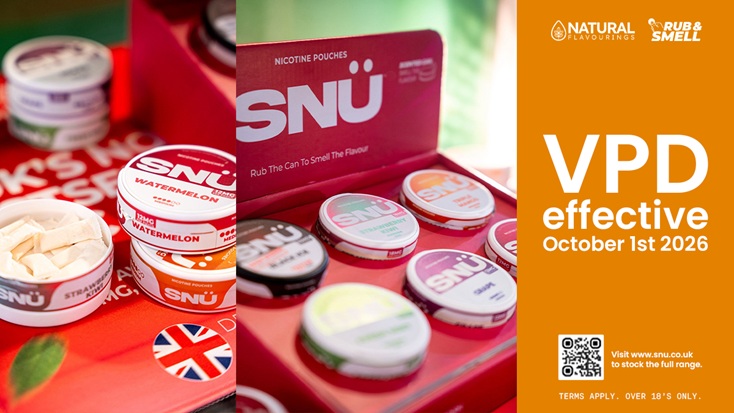
To fully compensate for the VPD’s effect on profit margins, retailers should prioritise stocking nicotine alternatives unaffected by the new tax. Nicotine pouches are becoming extremely popular in 2026, with the category growing 95% this past year and half a million regular users, it’s clear that consumer habits are shifting. At SNÜ, we have had a 660% increase in new customer acquisition this year, driven by growing consumer demand for discreet nicotine products and a greater focus on reduced-risk alternatives. By strengthening their nicotine pouch offering now, retailers can offset potential losses from VPD while meeting changing consumer demand and protecting long-term category revenue.
He continued:
Value will become and even bigger purchasing factor after October. Retailers that can offer the right balance of compliant vape products alongside fast-growing alternatives like nicotine pouches will be best placed to protect category sales.
SNÜ are investing in long-term category growth through product development, merchandising support and ongoing retail partnerships. As regulations change and further restrictions are put in place, we strive to work with the new polices, not against, ensuring compliance at every stage. Nicotine pouches can replace the revenue offset by the VPD tax, but retail staff must educate consumers in order to convert them. SNÜ provide all our stockists with education materials to support them through this transition. Bar Juice 5000 will manage duty compliance at source, meaning retailers can continue ordering through their existing wholesale partners without changing suppliers. As duty-stamped products enter the market compliant stock will continue to be supplied through normal distribution channels, helping minimise disruption during the transition.
Comments are closed.