


For FMCG manufacturers, the past five years have brought a near-constant drumbeat of technology adoption. Sensors, cobots, machine vision, predictive analytics, digital twins, generative AI – each promoted as the next essential investment for staying competitive. Margins are tight, labour markets unsettled, energy costs volatile, and retailers demanding more flexibility, faster changeovers and tighter traceability than ever before.
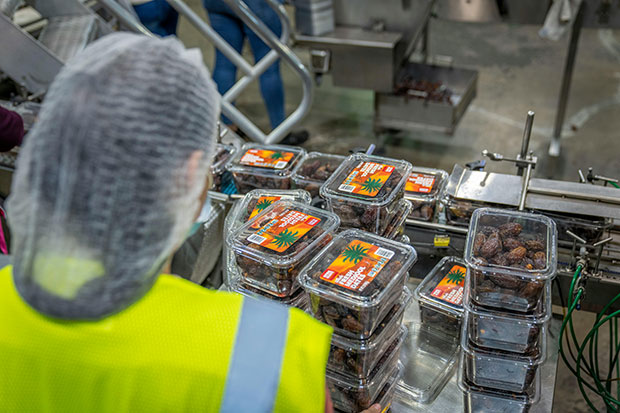 Yet for all the spending, the picture inside many factories is uneven. Some sites have transformed productivity and quality through carefully chosen automation. Others have ended up with expensive systems that produce data nobody acts on, dashboards nobody trusts, and AI pilots that quietly stall. The lesson is clear: the factory of the near future will not be defined by who bought the most technology, but by who deployed it most thoughtfully.
For grocery suppliers in particular – where SKU complexity, promotional volume and private-label demands keep rising – the question is no longer whether to modernise. It is how to modernise without falling for technology for technology’s sake, writes Simon Clark, Founder & CEO at Julius & Clark, Operational Consultants.
Start with the problem, not the platform
The most common mistake in factory transformation is leading with the solution. A vendor demonstration sparks interest, a budget is found, and a technology is deployed in search of a problem to solve. The result is a system that works as advertised but delivers little operational value.
A more disciplined approach begins with a clear-eyed audit of where the factory actually loses money, time or quality. Where do unplanned stoppages cluster? Which changeovers consistently overrun? Where does scrap accumulate? These questions sound obvious, but many sites lack the basic data to answer them confidently. That is itself a useful finding.
Once the genuine pain points are mapped, leaders can ask the more important question: what kind of intervention will actually fix this? Not every problem is a technology problem.
The three-question test
Before approving any significant investment in automation, analytics or AI, leaders should be able to answer three questions plainly.
First, what decision will this technology improve? If the answer is vague – “better visibility,” “more insight,” “data-driven culture” – the business case is weak. Good investments tie directly to a specific decision: when to schedule maintenance, which line to run a given SKU on, when to intervene on a quality drift, how to sequence orders for minimum changeover loss.
Second, who will act on the output, and do they have the authority and time to do so? Predictive maintenance alerts are worthless if engineering teams are already overstretched. Quality analytics are wasted if line operators have no remit to adjust parameters. Many projects fail not at the technology layer but at the human one, because nobody redesigned the workflow around the new information.
Third, is the underlying process stable enough to benefit from automation? Automating an unstable process simply produces defects faster – add vision-based inspection to a line with inconsistent upstream material handling and you will catch more rejects, but you will not fix the root cause. The honest answer is sometimes that better standard work, clearer escalation paths or simpler scheduling will deliver more value than any new system.
Where automation, analytics and AI genuinely earn their place
There are areas where the case for technology investment is strong and well-proven. Repetitive, ergonomically poor or hazardous tasks – palletising, case packing, certain cleaning operations – are sensible candidates for automation, both for productivity and workforce retention. Vision systems excel at high-speed inspection where human consistency falters. Predictive analytics genuinely add value on critical assets where unplanned downtime is expensive and failure modes are well understood.
AI is showing real promise in narrower applications: forecasting demand at SKU level for production planning, optimising energy consumption across utilities, and supporting frontline operators with conversational access to manuals, SOPs and troubleshooting history. Connected packaging and serialised coding – increasingly relevant as GS1 Sunrise 2027 approaches – delivers compounding returns across traceability, recall management and consumer engagement.
What these examples share is specificity. They solve a defined problem, produce an output someone is empowered to act on, and sit on top of a process stable enough to benefit.
Where better processes and better people still win
Equally important is recognising what technology cannot fix. Communication gaps between shifts are usually a process and leadership issue, not a software one. Slow root cause analysis reflects weak problem-solving capability rather than missing data. Changeover delays are frequently solved more cheaply by SMED workshops than by automation. High absenteeism and turnover will not be cured by a digital twin.
The factories that will pull ahead are those that invest in their operators as seriously as they invest in their systems. That means clearer standard work, better-structured shift handovers, accessible training, and genuine authority for frontline teams to stop the line and propose improvements. Information flow matters as much as data flow: a five-minute structured stand-up that surfaces the right issues to the right person is often more valuable than a dashboard nobody opens.
Re-thinking how FMCG products are made in the first place
Applying technology to make established products more efficiently is valuable – but the more ambitious question is whether the product itself could be made differently. Take beer: water and energy intensive, produced in large batches using a process several hundred years old. Working with a brewing client, we explored what production could look like starting from a blank sheet. One outcome was a “mother beer” model – a single base brew with natural flavours added in the pack hall to create a range of variants. Fewer changeovers, simpler supply chain, lower cost. For FMCG manufacturers more broadly: if you were designing your production process today, from scratch, which technologies would let you achieve the same output with significantly less energy and water – and turn that into competitive advantage?
A practical path forward
The factory of the near future is not a single destination but a direction of travel. Leaders who benefit most will treat technology as one tool among several, sequenced behind clear problem definition, stable processes and capable teams. They will say no more often than yes, pilot with discipline, and measure success by operational outcomes rather than systems deployed.
The grocery supply chain needs factories that are more flexible, more transparent and more resilient. That does not require buying everything on offer. It requires the harder work of knowing exactly which problem each investment is meant to solve – and being willing to solve some of them without technology at all.
Comments are closed.