


Supermarkets are well equipped to understand and negotiate consumer behaviour thanks to the wealth of transactional data they gather.
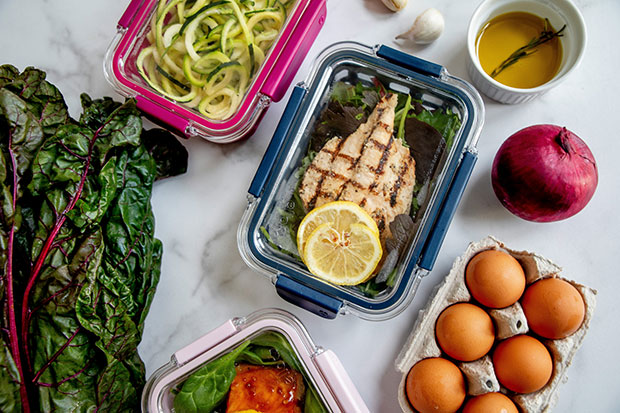
When consumers began to tighten their purse strings and restrict spending, grocers responded by spotlighting budget-friendly meals.
Asda’s ‘Just Essentials’ range and Tesco’s revival of its ‘Everyday Low Prices’ scheme are two prime examples.
While cost of living remains high on the docket, supermarkets are spotting other signals to respond to. While still early in the year, health and wellness have already been identified as priorities for the next 12 months. NIQ data shows that one in four households consider improving their health as the leading focus over the next 12 months, writes Katrina Bishop, Thought Leadership Activation Manager at NIQ.
Grocers have been quick to tap into this opportunity. Low-calorie meals are gaining prominence, with Sainsbury’s the latest to hit the headlines with its “small but mighty” range. This sees the UK’s second-largest grocer sell meals capped at 350 calories while still delivering a portion of fruit or vegetables alongside 20 grams of protein.
This is far from an isolated move. Retailers across the market are adapting in a bid to appeal to more health-conscious shoppers. Co-op has launched a new range of mini meals that are “inspired by global cuisine”.
Meanwhile, online delivery service Ocado has created a virtual “weight management” aisle featuring AG1 Supplement (a concentrated nutrient delivery product) and GLP-1 friendly options like an extra small steak.
The challenge for the sector isn’t just to respond to trends; it’s to delve deeper and understand what they mean in the long-term. In this instance, how will the increased popularity in low-calorie meals impact the future of grocery retail – and how should brands and retailers evolve their ranges, formats and growth strategies?
Breaking down consumption shifts
The desire for self-improvement hasn’t emerged overnight. The debate around how best to tackle obesity has persisted for decades. Historically, being overweight was attributed to a lack of willpower, fuelling the rise of dieting culture and weight-loss groups such as WeightWatchers (now rebranded as WW) and Slimming World.
In recent years, that narrative has shifted. The World Health Organization now classifies obesity as a disease, meaning that it can be medically managed. This has resulted in anti-obesity medications (AOMs) becoming highly sought after, with GLP-1s being particularly prominent.
GLP-1s work by suppressing appetite and prolonging the sensation of being full. They have been popularised by brands such as Ozempic and Mounjaro, which have already entered mainstream consciousness – but they’re far from alone. Challenger brand Ro sought to carve out market share by using a Serena Williams-fronted Super Bowl ad.
Adoption has been rapid. According to NIQ data, 9% of households already include someone taking weight-loss medication. This has had a knock-on effect on the value of grocery spend in certain categories, with larger portion sizes being one of those most severely impacted.
Reduced portion sizes are only part of the picture, though. Cost of living remains front of mind, with ongoing economic uncertainty and higher prices forcing shoppers to be more cautious with their purchases. In fact, NIQ data shows 70% of shoppers are actively looking to reduce their grocery expenditure. However, this doesn’t mean that they want to compromise on quality.
In other words, the onus is on brands to deliver products that provide sufficient nutritional value, whilst also being considered good value for money.
How should brands and retailers respond?
The era of the “bigger basket” growth model is beginning to shift. Success can no longer be defined solely by the number of products sold. Retailers that want to thrive must devise a strategy that serves intentional, mission-driven shoppers. And low-calorie ready meals only represent one effective response.
Product ranges are diversifying, in some instances deviating away from traditional physical formats entirely. This is evidenced by the sustained success enjoyed by liquid meal supplements. Huel remains one of the most prominent players in this space. Its plant-based formulas offer convenience without sacrificing the nutritional value of a full meal. This evidently resonates with today’s shoppers, with Huel’s wholesale revenue forecast to exceed £20m in 2026, compared to just £5.7m in 2024.
However, changing the composition of products isn’t enough. Consideration must extend to packaging and advertising. Bold visuals and familiar branding remain powerful tools for standing out on the shelf – but they’re not the only factors that will help secure purchase. As shoppers increasingly seek to “look behind the label”, clear messaging that emphasises authentic nutritional claims will quickly become a key differentiator.
For brands wary of straying too far from the current status quo, revisiting the fundamentals could deliver results. With shoppers scrutinising recipes more than ever in a bid to maximise value from every meal, leaner assortments and simplified ingredients lists leave little room for ambiguity. M&S’s recent expansion of its ‘Only Ingredients’ range, easily recognisable courtesy of its stripped-back packaging, reflects this approach. It prioritises transparency, but not at the expense of the “familiar, comforting flavours” that its customers are accustomed to.
From volume to impact
It would be easy for retailers to dismiss the low-calorie movement as another passing trend – and therefore doesn’t warrant significant (or ongoing) investment. Yet the evidence points to something far more structural. Weight management and healthier eating are firmly embedded in consumers’ personal agendas, both of which are already shaping how people shop.
To secure relevance and more importantly, a place in the shrinking basket, brands must rethink how they show up. Whether it’s revisiting in-store shelf composition, optimising portion sizes or providing clearer, more efficient comms around nutrition, the key to success lies in adaptation. Those that acknowledge a shifting landscape and base their response on data-led insights won’t just navigate new behaviours; they’ll futureproof their retail strategies.
Comments are closed.