



With millions of posts on social media, the little treat phenomenon has become a cultural movement – one where a $19 strawberry from luxury grocer Erewhon can go viral not as a cautionary tale of excess, but as something people genuinely aspire to.
Welcome to an era where self-care sounds like “I’m getting myself a nice coffee” and where brands have a significant opportunity to meet this moment with intention, writes Howard Wright is Executive Creative and Strategic Director, EMEA & Canada, at Equator Design, a global packaging design company.
The evolution of affordable joy
Little treat culture didn’t emerge in a vacuum. It’s the result of an era defined by economic uncertainty, career instability, and widespread burnout. For Millennials and Gen Z in particular, the traditional markers of adult success – home ownership, a nice car, regular holidays abroad – have become increasingly out of reach. Instead, they’ve pivoted toward something more attainable: small, everyday luxuries that deliver moments of pleasure without the cost or commitment that come with larger purchases.
In terms of consumer behaviour, this isn’t completely new. During the Great Depression and subsequent recessions, economists noted the ‘lipstick effect’, a tendency for consumers to purchase small luxury items when larger ones feel unattainable. Today’s version sees everyday indulgences becoming a form of self-care, with shoppers increasingly shifting from basic snacks to more premium, luxurious food and drink moments (think specialty coffees, artisanal breads and luxury olive oils). These micro-rewards help people navigate daily stress, offering emotional uplift without the financial anxiety.
And the data backs this up. In Mondelez’s 2024 State of Snacking survey, 81% of respondents said they snack to find ‘quiet moments to themselves’ while 77% agreed that “snacking is one of the few indulgences I have these days.” That said, snacks aren’t the only ‘little treats’ on offer. Consumers are seeking elevated versions of familiar categories, including healthier, gourmet, artisanal, or functionally enhanced products.
The psychology of micro-indulgence
What makes a little treat so psychologically effective? For one, it offers a low-risk, low-guilt hit of pleasure. Consumers feel that they’re maintaining control – after all, it’s just a small thing – while still enjoying life’s luxuries. The emotional justification is powerful: this treat feels earned, special, elevating. It’s a gift to oneself that delivers the benefits of improved wellbeing.
The New Year influences this mindset in interesting ways. Typically, these months are marked by a general sense of restriction, often driven by post-Christmas financial concerns and freshly made health resolutions. Within this period of restraint, the desire for a small ‘payoff’ intensifies dramatically. When you’ve turned down after-work drinks and meal-prepped all week, that bar of premium dark chocolate feels especially deserved.
This creates a fascinating tension between balance and reward that brands can tap into. The consumer wants to be ‘good’ but also needs moments of pleasure to sustain that commitment. That’s why better-for-you alternatives that still feel indulgent are particularly appealing during this window.
The Instagram effect
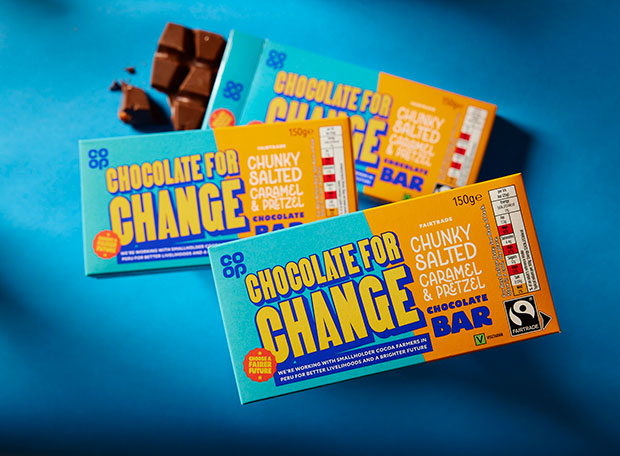
If part of the value of a little treat is the joy it brings, then social media has exponentially amplified that value by making treats even more visible, shareable, and aspirational. Platforms like Instagram and TikTok have heightened expectations around how treats should look, feel, and be presented, with ‘daily vlogs’ and ‘little treat hauls’ normalising self-care moments as content. Aesthetic value matters enormously here with premium-looking packaging and sensory unwrapping all contributing to the perception of indulgence.
Ceremony is important and packaging is integral to this. How a product is displayed, held, opened, and stored plays a defining role in whether it feels like a treat or just another purchase. Premium cues can turn a basic product into something gift-like and deliver a sense of occasion. Texture (soft-touch finishes, embossing, quality materials that feel substantial in hand) and colour can signal indulgence, wellness, artisanship, or luxury, while structure can surprise and delight (a box with an inner reveal or a tin that becomes a keepsake).
For brands looking to tap into the little treat phenomenon, the question isn’t just “what’s inside?” but “what does this experience deliver?” A little treat must not only taste or perform well; it should deliver emotional satisfaction from the moment of selection through purchase, unboxing, and consumption.
Designing for emotional reward
The little treat phenomenon represents a shift in how consumers approach self-care and self-reward in uncertain times. Products that feel like a small present to oneself – affordable, justified, and aesthetically pleasing – have become embedded in our routine behaviour.
For brands and retailers, this opportunity demands an understanding of what makes something feel special to their consumer, and a commitment to delivering not just a product but an experience. After all, this isn’t logical, need-based shopping. It’s emotional, and driven by the very human need for joy, control, and moments of pleasure during challenging times. The brands that succeed in this space will be those that create and design products that feel like small acts of self-kindness.
Because sometimes, a little treat is exactly what we all need.
Comments are closed.