


Food waste is one of the most costly problems in retail, but one of the least understood. At a time when retailers are operating on razor-thin margins and under sustained cost pressure, losses are being written-off as an inevitable cost of doing business and absorbed into already-constrained P&Ls.
This is largely because food waste is still being seen as a sustainability issue alone. Businesses must wake up to the reality that waste is so much more than this; it is a business-critical commercial opportunity, writes Julie Vargas, VP/GM, Enterprise Intelligent Labels Growth, Avery Dennison.
Despite years of sustainability pledges and operational focus, it is astounding that, at the outset of 2026, retailers still don’t have a clear view of where food waste occurs in their supply chain. And without identifying the points at which waste is generated, retailers will never be able to take advantage of it – risking continued food systems deterioration and losses the industry cannot afford.
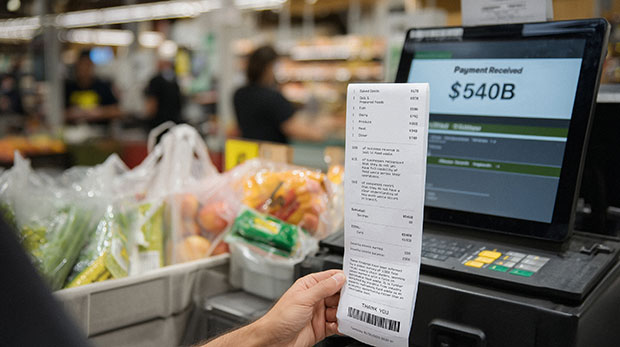
Our recently released global report, Making the Invisible Visible, polling 3,500 businesses, shows that across the retail supply chain, from processing to point of sale, food waste costs are equivalent to 33% of revenues. This lack of insight is holding retailers back from addressing a $540 billion opportunity in 2026 alone, with the majority (61%) of retail leaders admitting they do not have full visibility of food waste across their operations.
That disconnect between scale and understanding explains why progress has stalled. When waste is invisible, it can’t be owned, measured or managed. It stays trapped as a hidden drag on margin rather than treated as a recoverable source of value.
Retailers hold the key to industry-wide change
Retailers sit at the most powerful position in the food system. They connect growers, manufacturers, logistics providers and consumers, influencing behavior of buyers at each stage. When retailers act, the system responds.
But leadership now has to look like more than ambition. It means making waste visible end-to-end by closing data gaps with smart packaging and digital identification. We believe every food item should carry a digital identity, so losses can be pinpointed and prevented upstream as opposed to just written off at store level.
Just as importantly, retailers can connect suppliers and partners around shared standards and better data-sharing, aligning incentives on forecasting, markdowns and redistribution. Done well, this improves availability, reduces write-offs and makes waste reduction a shared commercial outcome rather than a siloed sustainability initiative.
This is especially clear in perishables, where value is high and shelf life is short. Meat is the single most challenging category for retailers to manage (50%), but the real story is where the pressure points sit. Our research shows meat waste challenges are distributed across manufacturing and processing (21%), distribution (18%), packaging constraints (16%) and shelf display (17%).
That’s why treating waste as only a store-level problem is a dead end. For businesses struggling with meat waste, one-in-five say manufacturing is where the problem is most acute. In practice, that can mean pallets lost to mislabelling or shipments held because expiry data is unclear, turning perfectly good products into write-offs.
The first step: understanding where waste really happens
Too often, waste is tackled as if it’s a shelf problem, but food waste is a symptom of system design. If you focus too much on one link in the chain, you can end up shifting the problem elsewhere.
Without item-level insight, these losses fall downstream, so by the time waste appears on the shelf, the damage has often already been done.
This is the real issue: when retailers can’t see where waste happens, they can’t fix it. Supply chains have historically operated with data disappearing between production, transport and shelf. Traceability can change that narrative by turning reactivity into proactive logistics. This involves tracking location, temperature, humidity and handling conditions so businesses can spot hotspots early and intervene before value is destroyed.
It is these blind spots that are proving costly. The majority of businesses still don’t have full visibility of food waste across operations and 56% admit they don’t understand how much waste occurs in transit. In perishables, even a delay of just two days in transit can mean total product loss. That’s why ‘where waste happens’ is so relevant.
The tools already exist
The positive is that the technologies needed to tackle food waste at scale already exist for retailers and are being deployed today. Digital identification, intelligent labelling, connected packaging and IoT-enabled monitoring can give retailers real-time insight into where products are, how fresh they are and how quickly they need to move. Guesswork can be replaced with precision.
This can lead to smarter forecasting, faster decision-making and earlier interventions, whether that’s rerouting stock, adjusting markdowns or preventing errors before they become write-offs. Fundamentally, it also equips store teams with better information, which reduces manual work while also improving outcomes.
We’re already seeing what that looks like in practice. Walmart, for example, is expanding RFID to fresh categories including meat, bakery and deli. This gives products a digital identity that helps teams track inventory more accurately; spot items nearing expiry and make faster decisions on replenishment and markdowns.
The priority for retailers now is execution. To start, they need to connect physical products to a digital identity to create item-level visibility. That visibility can then be extended upstream and in transit through IoT-enabled monitoring, helping close data gaps in manufacturing and transport where waste often goes unseen. It can also be reinforced with packaging and sensing innovations that protect freshness against temperature stressors and transit risk.
Finally, AI will, of course, play a growing role in retail operations, but its value depends on the quality of data feeding it. Without reliable, item-level visibility across the supply chain, even the most sophisticated tools will struggle to keep up.
From hidden cost to growth driver
For retailers, sustainability is a growth and profitability opportunity.
Those who act now can turn the double loss of rising costs and lost sales into a double win of stronger margins and more resilient supply chains. They can reduce exposure to regulatory risk, build consumer trust through greater transparency and lead an industry-wide shift toward smarter, more efficient food systems.
This can be the year retail moves from ambition to action. The tools are ready and the opportunity is there, but it starts with visibility. When retailers identify where waste happens, they can act earlier and turn blind-spot inefficiency into recoverable value.
To find out more, download the report – Making the invisible visible: Unlocking the Hidden Value of Food Waste to Drive Growth and Profitability: www.averydennison.com
Comments are closed.