


Promotions are often grocery retailers’ go-to tool, and they are important tactics for driving sales and influencing shopper behaviour. But in an era of persistent price sensitivity and fragmented shopper loyalty, they have also become a new competitive battleground between retailers. With promotional spending now representing a substantial share of total grocery sales, the need to differentiate offers from those offered by other retailers while still extracting maximum value from every promotional pound or dollar spent has never been more acute.
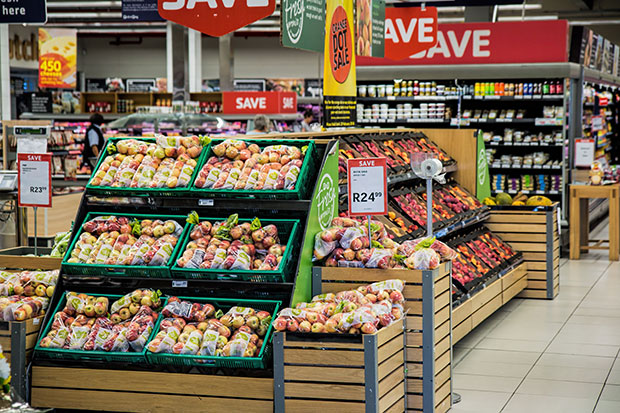
Fortunately, most grocery retailers already have a useful asset in this competition: their loyalty programmes. Loyalty can be the engine that supercharges a retailer’s promotional effectiveness, provided they have the necessary infrastructure to support real-time personalisation, algorithm-driven offers and more flexible digital engagement, writes Jeff Baskin, Chief Revenue Officer at Eagle Eye.
Promotions as Competitive Currency
The scale of promotional activity in grocery retail reflects its strategic importance. In the UK, promotions now account for 28.2% of grocery spending, demonstrating how central discounting has become to the weekly shop. This level of saturation creates both opportunity and risk: promotions can either drive traffic, build basket size, and reinforce price perception, or they can eat into already-thin margins without generating incremental sales.
This duality is compounded by shifting shopper behaviour. Cost-of-living pressures have made consumers scrutinise their purchasing decisions more closely and made them more willing to switch retailers for better value. For grocers, promotions aren’t about casting a wide net anymore, but rather calibrated to deliver targeted value to the right shoppers at the right moment. And that capability depends heavily on the underlying technology infrastructure.
Overcoming the Limitations of POS-Based Promotional Systems
Many grocery loyalty programmes are built on point-of-sale (POS) architecture designed for an earlier era. These systems excelled at applying discounts at checkout and tracking transactions for later analysis, but they were never designed for the demands of modern promotional strategies.
POS-based loyalty systems typically operate in batch mode, processing customer data overnight rather than in real time. This creates latency between shopper behaviour and retailer response. A customer who shifts their purchasing patterns today may not see a relevant offer until next week, by which time they may have already visited a competitor.
These systems also tend to be rigid in what they can execute. Introducing new promotion types, supporting gamified engagement mechanics, or delivering personalised pricing often requires significant development work. Consumers accustomed to personalised experiences in other retail contexts increasingly expect grocers to provide the same, widening the gap between shopper expectations and retailer capabilities. Legacy infrastructure only adds to the challenge.
Embracing New Loyalty Infrastructure
Recognising these limitations, grocers across the U.K. and North America are investing in loyalty infrastructure modernisation. The common thread is a move away from POS-dependent systems toward cloud-based platforms that support real-time decision-making and more flexible and innovative promotional execution.
In the U.K., major retailers have been actively upgrading their loyalty technology stacks. Tesco’s Clubcard programme, long a benchmark for grocery loyalty, has evolved to incorporate AI-driven personalisation that delivers tailored challenges and offers to millions of members. The programme’s ability to execute one-to-one marketing at scale reflects substantial investment in underlying platform capabilities.
Morrisons has similarly invested in modernising its More Card programme, seeking to create more dynamic engagement with shoppers across digital and physical channels through AI-powered promotions and personalised challenges. The emphasis is on moving beyond static discount structures toward more responsive, behaviour-driven promotional mechanics.
Across the Atlantic, Wakefern Food Corp. announced plans to replace its POS-based loyalty approach with a cloud-based platform capable of supporting real-time, omnichannel engagement. As the largest retailer-owned cooperative in the United States, Wakefern operates more than 380 supermarkets across multiple banners, including ShopRite and The Fresh Grocer. The new loyalty infrastructure will enable centralised loyalty management across the cooperative while supporting AI-powered personalisation and gamified challenges designed to drive incremental sales.
These investments all show a trend toward loyalty technology that enables speed and flexibility. Cloud-based platforms allow retailers to deploy new campaign types without lengthy development cycles, test promotional mechanics quickly, and adjust strategies based on real-time performance data.
Algorithm-Driven Offers as a New Model
Perhaps the most meaningful changes enabled by modern loyalty infrastructure is the move toward algorithm-driven promotional decisioning. Rather than relying solely on mass, segmented and “picked for you” promotions applied uniformly across the customer base, retailers are experimenting with AI-driven offers that adapt to individual shoppers.
Algorithms analyse purchase history, timing patterns, category preferences, and promotional response to determine which offers are most likely to influence behaviour for a specific shopper, helping retailers redirect spend from broad discount distribution toward more precise, performance-driven investment.
For retailers, algorithm-driven offers promise better promotional ROI. By targeting offers toward shoppers most likely to respond incrementally, grocers can avoid discounting purchases that would have happened anyway. For shoppers, the model delivers more relevant value and offers that align with their actual preferences.
Leveraging Loyalty for Higher-Performing Promotions
The modernisation of grocery loyalty infrastructure carries broader implications for how the sector operates. The bar for promotional execution is rising, and retailers still dependent on legacy systems may find themselves at a structural disadvantage as competitors deliver more responsive, personalised engagement.
At the same time, the relationship between grocers and CPG suppliers is evolving. Modern platforms offer better measurement of promotional effectiveness, creating opportunities for more sophisticated supplier-funded programmes. Brands seeking to reach specific shopper segments can partner with retailers on targeted campaigns with clearer attribution.
The definition of loyalty itself is also shifting. Programmes built solely around transactional rewards are giving way to engagement models designed to influence behaviour across the full shopping journey. Points and discounts remain important, but they are increasingly supplemented by personalised challenges, gamified mechanics, and contextual offers delivered in real time.
For grocery retailers navigating a challenging operating environment, these capabilities go beyond incremental gains. They support promotional strategies that deliver value to shoppers while protecting margin, a balance that legacy systems were never built to achieve.
Comments are closed.