


For some small grocery retail businesses, cybersecurity may feel like a box-ticking exercise or one that is purely focused on protecting customer data. However, as threats increase in volume and become more sophisticated, the risk to operations and supply, too, is growing.
According to government statistics, tens of thousands of businesses suffer from cyberattacks every year. And, while ransomware rates, in particular, are reportedly in decline, they are still threats to be vigilant for. And, around half of all small businesses in the UK suffer from some kind of cyber incident annually.
Given that threat motives vary from data theft to causing intentional disruption, there has never been a better time for small to medium grocery retailers to tighten up their security postures.
Growing digital threats to the grocery supply chain
Evolving digital threats are not purely focused on individual retailer impacts. Modern attackers know that food and comestibles form a critical sector. This is why many focus on attacking key parts of global supply chains, aiming to cause a ripple effect of operational disruptions.
Ransomware locks down systems until victims pay a ransom fee to their attackers. Even then, cybercriminals may hold out for more. Using social engineering and generative AI tools, too, attackers can gain access to internal systems through public-facing forms and even email. Therefore, any cardholder data stored behind the scenes is immediately at their mercy. Retailers can reduce that risk with regular PCI compliance assessments, which test how securely payment card information is stored, processed and protected.
Launching an automated attack that locks down, for example, systems belonging to a meat supplier, effectively leaves retailers and food producers waiting for their supplies with unlimited timescales.
What’s more, attackers can travel across a supply chain where there are weak links. A retailer’s cardholder information (and daily operations) may be at risk if a third-party supplier accidentally lets hackers into their databases. Risks increase if data is shared with suppliers, and savvy attackers can find routes across to linked companies, even where those companies are more robust.
Verizon’s 2026 Data Breach Investigations Report advises that 48% of all data breaches it analysed over 12 months involved a third party to some extent. Therefore, small business owners not only need to think carefully about their own cybersecurity posture, but also that of any vendors and suppliers they work with.
A good place to start is carrying out such assessments regularly and rigorously, which helps retailers follow regulatory standards while building a baseline against modern cyberthreat vectors. However, more can be done to protect both data and operations.
Why cybersecurity is a major operational risk for retailers
The current threats posed by ransomware downtime and potential vulnerabilities in the supply chain are placing retail leaders in a concerning position. Maintaining cybersecurity and performing continuous risk assessments now helps to fortify their day-to-day operations. Attacks could bring down payment systems, delay stock replenishment, and disable ecommerce transactions.
Critically, the compounding effect is loss of revenue, higher risk of compliance enforcement and fines, and reputational damage. Many smaller grocery retailers that are still growing customer bases cannot afford to lose uptime or fall behind on stock control.
And yet, many attackers know this only too well. Small to medium retailers will be under particular pressure to bring operations back online as soon as possible.
Even small retailers handle and store large volumes of cardholder data and rely on multiple vendors in the chain to keep operations running. Attackers often use ransomware to target these businesses, creating chaos, stealing sensitive data and extorting money from firms that can’t afford to lose business and reputation.
The positive news is that up to 69% of small to medium businesses actually refused to pay ransomware demands because they had strong enough backups in place. However, that still means around 31% are in a precarious position.
Importance of securing point-of-sale systems and customer data
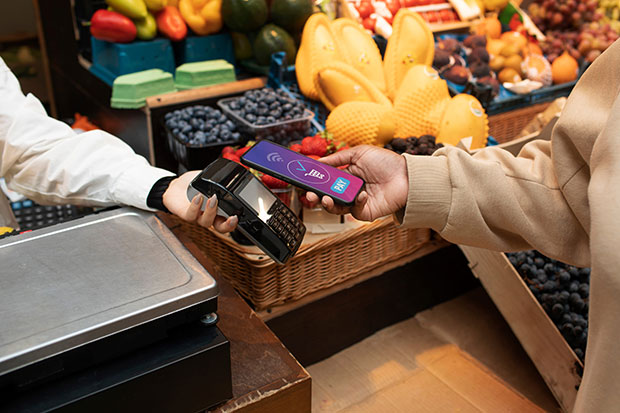
As a small to medium grocery retailer, securing point of sale systems and the customer data they process is a critical step in laying down a cybersecurity baseline. Securing POS effectively and regularly assessing risk helps to protect sensitive information from incoming attacks and helps to build trust with incoming customers.
Crucially, customers are likely to be more comfortable and willing to purchase from a retailer that can assure them their data is safe.
What’s more, securing POS effectively helps retailers to fulfil PCI DSS requirements, which are guidelines set by payment processors to ensure data protection. Failing to meet these requirements can result in enforcement, fines, and even legal action.
Steps such as regularly updating system patches, minimising data retained, and enforcing staff multi-factor authentication (MFA) all help to reduce a business’s attack surface. These steps not only help to reduce the potential for data theft but also the chances of retail downtime.
How regular security assessments protect retail cash flow
With regular security assessments, risk analyses, and continuous updates and training, small retailers can prevent stock shrinkage and payment fraud. Fraud and data breaches may result in payment processors applying fines or restrictions to how cash is handled, meaning growth potential may also be curtailed.
It’s therefore never been more important for grocery businesses, including the smallest independent retailers, to build regular cybersecurity checks into their operational processes. Regular security assessments, carried out by vetted third parties, can help retailers to proactively spot threats before they cause serious harm.
Cybersecurity is now at the top of the retail agenda, even for small to medium businesses. And, with the emergence of smarter cyberthreats, regular assessments will help them to stay several steps ahead of malicious attacks that could cause long-term cash flow damage.
While regular cybersecurity practice is an additional time and cost investment, it is worth it several times over to keep retail operations ticking over safely.
Comments are closed.