


The UK’s HFSS advertising restrictions exist to tackle childhood obesity. That is a noble aim and honestly, an unarguable one. Anyone fighting that battle is on the right side of history.
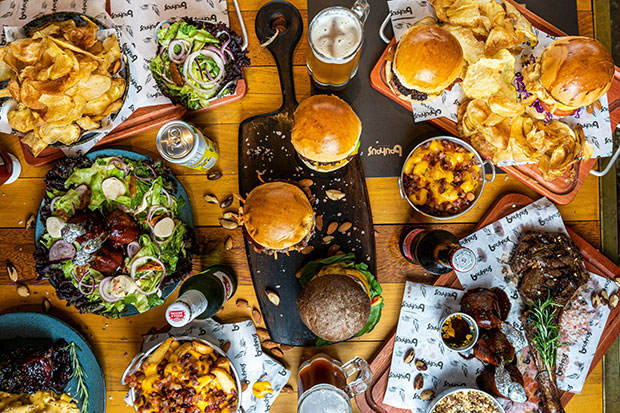
The more interesting question for brands, agencies and the people actually making them work is this: how do you keep food looking indulgent and irresistible when you’re no longer allowed to show the bits that make people drool?
Some smart thinking is already emerging. Marketing professor Mark Ritson recently made a compelling case that the ban will steer brands away from product pushing and towards brand-building. For FMCG brands under constant retailer pressure, that shift really matters. Because brand-building is what creates long term value and we all know price promotions do quite the opposite, writes Olaf van Gerwen, Founder & Global Creative Director at Chuck Studios.
As Ritson points out, brands like Cadbury’s have been investing in brand narrative for years – and it shows. We can spot a Cadbury ad from across the room because they’ve been consistently telling cinematic stories and activations about generosity for years. Cadbury’s recent ‘Made to Share’ campaign work raised a smile, as much as the ‘Homesick’ ad. That’s the power of long-term brand memory doing the heavy lifting. The brand made a compliant version in which the chocolate bar is replaced with a Cadbury-branded envelope. We’re waiting for the test results but the story stands in both. The name, logo, colour and narrative style are the brand assets here. An excellent example of how a suite of powerful distinctive assets makes an ad work even without a product in frame.
Les Binet has also reminded us that products themselves are still among the most powerful storytelling tools a brand has. As a filmmaker, I’m firmly in Binet’s camp. Food is drama. It has texture, tension and payoff. Remove the product entirely and you’re left directing abstract nouns. Good luck lighting that.
The ban won’t kill product advertising, it will retime and redistribute it. Owned media remains fair game: apps, websites, CRM, organic social. That’s where the burgers will gleam, the cheese will stretch and the bacon will shimmer like it’s been polished by angels. Paid media will increasingly become the entry point, using strong brand stories to bring people into owned spaces where the brand can fully express itself.
Physical spaces will also step up. Restaurant windows, kiosks, OOH and DOOH are suddenly very serious creative real estate. While some cities are already flirting with tighter rules – Amsterdam’s meat-ad ban being the canary in the coal mine – for now, food can still look like food in the real world. Windows still exist. Billboards still exist. Hunger still exists.
Where things get genuinely interesting is in how portfolios evolve. Big Soda is already largely compliant thanks to zero sugar variants. Big QSR brands will follow – and fast. But don’t confuse compliant with boring. This is where craft comes in.
Take a salad. On paper, it’s virtuous. In the hands of a filmmaker, it’s a cinematic weapon. Imagine crisp lettuce snapping under studio lights. Onions simmering and caramelising. A glossy (yet low-fat!) dressing poured in slow motion. Maybe a few strategically portioned chunks of crispy chicken. Fully compliant. Entirely legal. Shot loud, proud and unapologetic. Every frame quietly whispering: “You know us. You know what we’re really about.”
That’s how distinctive brand assets can be built under restriction. You anchor them in compliant products, load them with memory, attitude and appetite and then you capitalise on the non-compliant favourites where and when you’re allowed: post-9 pm on TV, on owned platforms and in-store. You don’t erase the fried chicken. You manage its appearances like a film star on a tight contract.
Expect a surge in creative boundary-pushing. If you can’t show the product, can you describe it? A radio script luxuriating in teeth sinking through molten cheese into umami-rich beef. Or show the moment after the meal: satisfied faces, greasy fingers discreetly wiped and the logo landing like a mic drop. The burger never appears, but everyone knows exactly what just happened, like a bleeped-out f-bomb on a late-night talk show.
So, yes, the HFSS rules change the game. Certain tactics are less available at certain times and platforms. But restrictions are the midwife of creativity. They simply force brands to be smarter about how they trigger desire.
Deliciousness isn’t dead. It’s just been given a new brief and honestly, that’s usually when the best work begins.
Comments are closed.