


Radnor Hills is one of the UK’s leading independently owned and run soft drinks manufacturers.
The company produces over 400 million drinks each year, all made using the exceptionally pure Welsh spring water sourced from its boreholes just minutes from its production site in Knighton, Powys.
As well as still and sparkling Radnor Spring Water, it makes Heartsease Farm, its range of award-winning sparkling presses, Radnor Splash, which sells at the rate of three units every second, a range of school compliant drinks and a variety of own-label solutions for its retail partners.
The company kicked off 2026 with its biggest ever launch month and has three new products available.
Radnor Spring is a new low-calorie sparkling water in four refreshing and fruity flavours all with added B vitamins.
Radnor Hydrate is clean and simple, a refreshing 60% natural fruit juice and 40% natural spring water.
Radnor Fruits Disney is made with 50% fruit juice and 50% spring water and its pull-tab technology means customers can drink it straight from the pack.
The award-winning company, which recently celebrated its 35th anniversary, is passionate about sustainability and prioritises sourcing ingredients and packaging locally to reduce its carbon footprint.
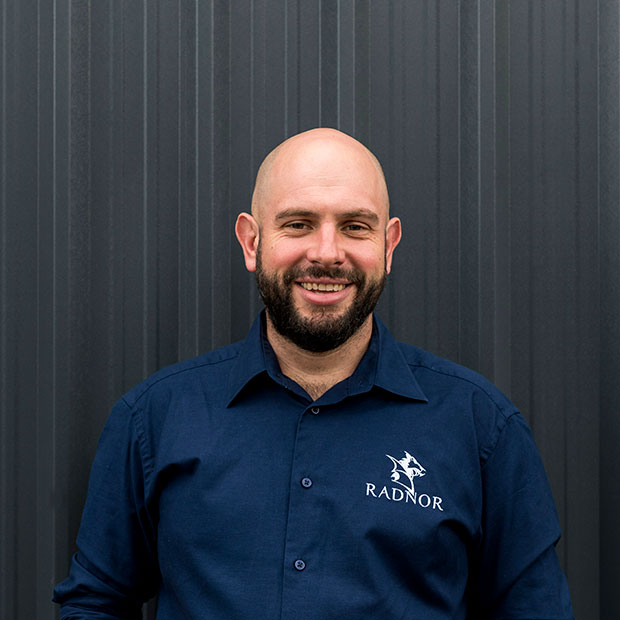
Chris Sanders, Sales & Marketing Director of Radnor Hills, tells Grocery Trader why sustainability is embedded in the company’s very nature.
What is Radnor Hills doing in the area of sustainability?
Our aim is for Radnor Hills to be seen as a trusted staple in the beverage industry, recognised not just for product quality, but also for our unwavering commitment to environmental and social responsibility.
This trust allows our stakeholders to focus on enjoying our products, confident that we have made the most responsible decisions on their behalf.
We have a rare, vested interest in protecting the magnificent environment around us because the family of our founder and CEO William Watkins has farmed the land here for five generations.
Our sustainability initiatives span renewable energy generation, water stewardship, responsible sourcing, packaging innovation, waste reduction and carbon management.
We have committed to becoming a net zero business by 2045 and have submitted our plans to the Science Based Targets initiative (SBTi), one of the few SMEs in the food and drink sector to do so. These plans underpin investment decisions across operations, logistics and product development, ensuring environmental responsibility aligns with commercial resilience.
How is Radnor Hills making as little impact on the environment as possible?
Our rural location reinforces our strong environmental ethos, with a focus on protecting the surrounding countryside.
We have a number of boreholes on our land which means we can operate directly from our own spring water source, significantly reducing raw material transportation.
Manufacturing, bottling and distribution are all managed on-site, limiting unnecessary movement across the supply chain.
All of our products are fully recyclable – our plastic bottles and shrink wraps are 100% recyclable, our cartons are straw-free or have a paper straw option, and our cans are infinitely recyclable and sourced only 65 miles from our farm in Wales.
We’re proud to have sent zero to landfill since 2018, have an on-site bespoke recycling facility and an expert in-house team to facilitate this.
What steps has Radnor Hills taken to reduce its carbon footprint?
Our production site just outside Knighton is the only one in Europe that we’re aware of with lines managing glass, PET, cans and Tetra Pak, and this multi-format facility means we can significantly reduce onward transport costs and energy use, offering a true basket of products for our wholesalers and retailers, all from one collection point, our zero to landfill site in Powys.
Along with our PET preforms, which are blown onsite, the glass for our Radnor brands travels down from our supplier in Chester, vastly improving our upstream impact on the environment.
To enhance our offering further we procure our empty base cans from Ardagh Metal Packaging based in the neighbouring Welsh city of Wrexham. We have also teamed up with them to produce co-branded, infinitely recyclable cans of spring water for high-profile DP World Tour golf tournaments to aid their goal of removing plastic from their events.
Tell us about your solar farm. How much of the company’s annual electricity consumption is generated by the solar farm?
In order to pursue our vision of an increasingly greener future, at the end of 2023 we installed a new solar system worth £1.8 million, which added to the existing panels installed on the rooftops of our facilities.
This new system, which produces 2,000Kwh of energy per year, is today generating 25% of the electricity needed within the company.
By generating renewable energy directly at source, we’re reducing reliance on grid electricity and shielding ourselves from energy market volatility, while lowering our Scope 2 emissions.
Tell us about Radnor’s waste treatment processes.
All of our onsite waste is processed by our brilliant waste and recycling team using our on-site bespoke recycling facility. This ensures that every bit of our waste is managed responsibly and is integral to our operation and value chain.
Process water is treated before being safely returned to the environment, ensuring compliance with environmental standards and protecting local ecosystems.
Are your bottles made from recycled materials?
Our environmental commitment could not overlook the aspect of packaging. All our PET bottles are 100% recyclable and are made up of 30% recycled material.
We were also the first company in the industry to use 100% recyclable shrink film that’s made up of 30% recycled plastic.
We have also invested in bottle lightweighting to reduce overall plastic usage without compromising product integrity.
Tell us about the closed loop system Radnor Hills uses for its plastic bottles?
We partner with our key suppliers to ensure best practice is met when providing a service. These standards are rigorous but also constructive.
An example of this can be seen in our closed loop system with our plastic bottle preform supplier, Plastipak. Any waste plastic preforms are captured onsite, sorted, bailed and returned to them ready to be made into more plastic preforms or products.
How is Radnor Hills working with the government on the Deposit Return Scheme and Extended Producer Responsibility?
Our CEO William Watkins, who is also President of the British Soft Drinks Association, has called on the Welsh Government to help unlock the way for an interoperable Deposit Return Scheme (DRS) to support recycling.
He said: “It is such a crucial time for the industry as we head towards setting up a Deposit Return Scheme, along with retailers and alcohol producers, to deliver a realistic and practical system to return and recycle our containers in a more sustainable way.”
When asked about EPR, Chris said: “Extended Producer Responsibility fees have crept up and surprised a lot of manufacturers and members of the supply chain.
“While we’ve been ahead of the market in discussing this with our partners, clarity and consistency around what the costs will actually be is vital. Without this, it becomes very challenging to cost products accurately.”
What does it mean to be ISO 14001 accredited?
Our Environmental Management System has been certified to ISO 14001 standard, showing customers and suppliers that we take our impact on the environment seriously and are committed to keeping it at the forefront of the business.
The Environmental Management System assesses our impact throughout the entire value chain and identifies key areas of improvement, along with governance and expectations of our stakeholders internally and externally.
The system aligns with our company culture of continuous improvement and frequent auditing is conducted internally and externally.
Radnor Hills aims to be net-zero by 2045. How do you aim to achieve this?
We’re committed to carrying out our business as sustainably as possible and have put in place a number of measures to directly support decarbonisation within the soft drinks and wholesale supply chain, from providing lower-carbon product options, improving logistics efficiency and promoting packaging sustainability.
By integrating renewable energy, packaging circularity and carbon management into our growth strategy, we support both our commercial partners and the wider wholesale sector in achieving net-zero goals.
We’re proud of the progress we’ve made. We were the first winner of the Excellence in Sustainability Award sponsored by the Welsh Government.
We were also named Sustainable Supplier of the Year in the annual Gold Medal Awards run by the Federation of Wholesale Distributors. Extra special was being told by the judges that we’re “leading the way in sustainability far beyond our size and scale” and that it was “a landslide win”.
Comments are closed.